Mostly in the Zone

Our Panama City hotel was the Bristol Hotel, conveniently located near the waterfront and the shopping district. Our room was enormous and comfortable. Breakfast was in the hotel restaurant, and, while perfectly acceptable, was probably the least interesting breakfast we’d had on the entire trip.

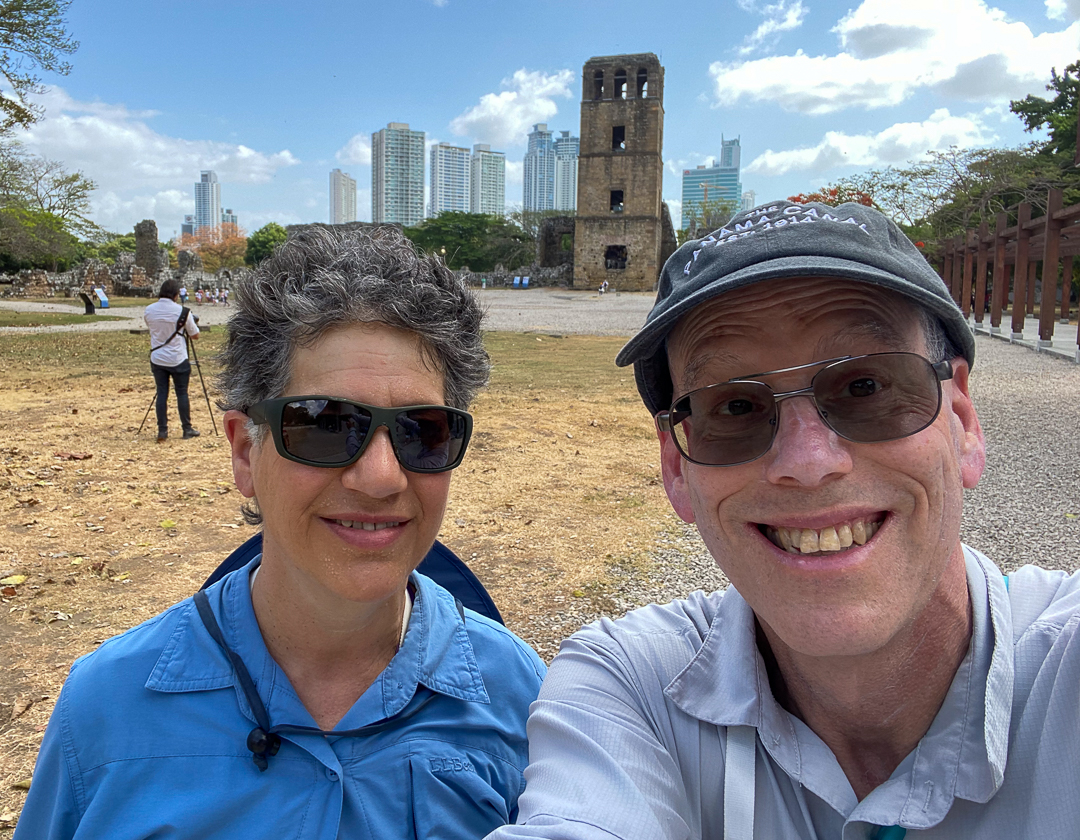
The day’s touring began at Panama Viejo, a UNESCO World Heritage Site. We saw the ruins of the Church and Covenant of the Conception.
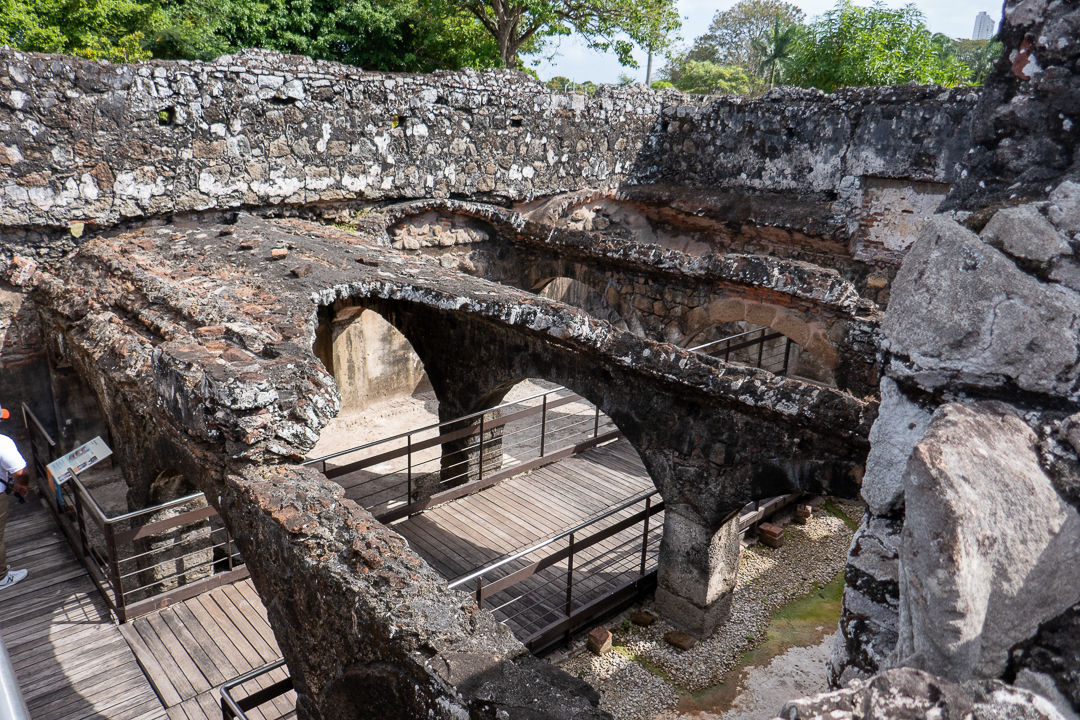
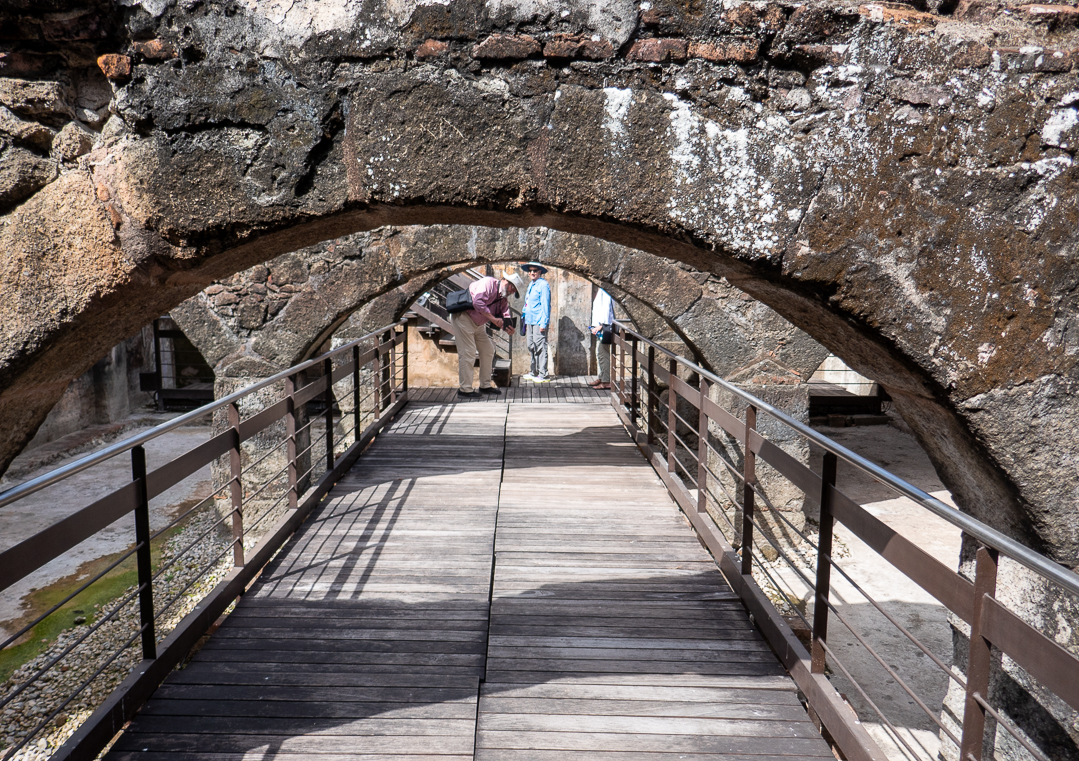
Panama Viejo was founded in 1520 and destroyed by the Welsh privateer Henry Morgan in 1671 – I wonder what they would have thought of modern Panama City.
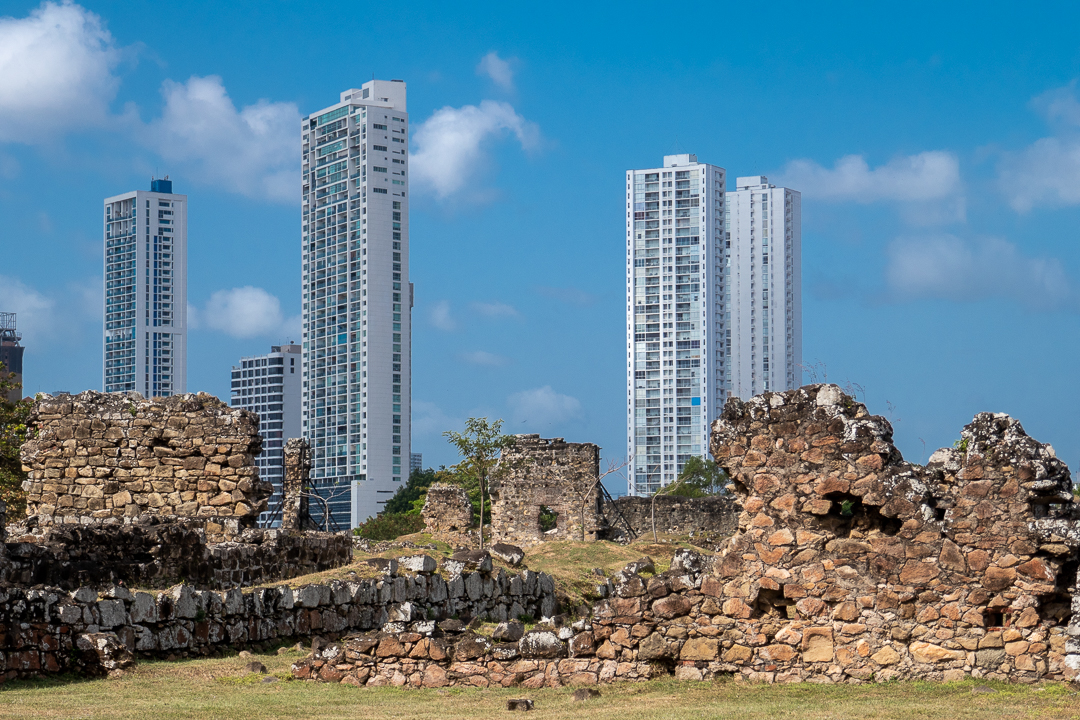
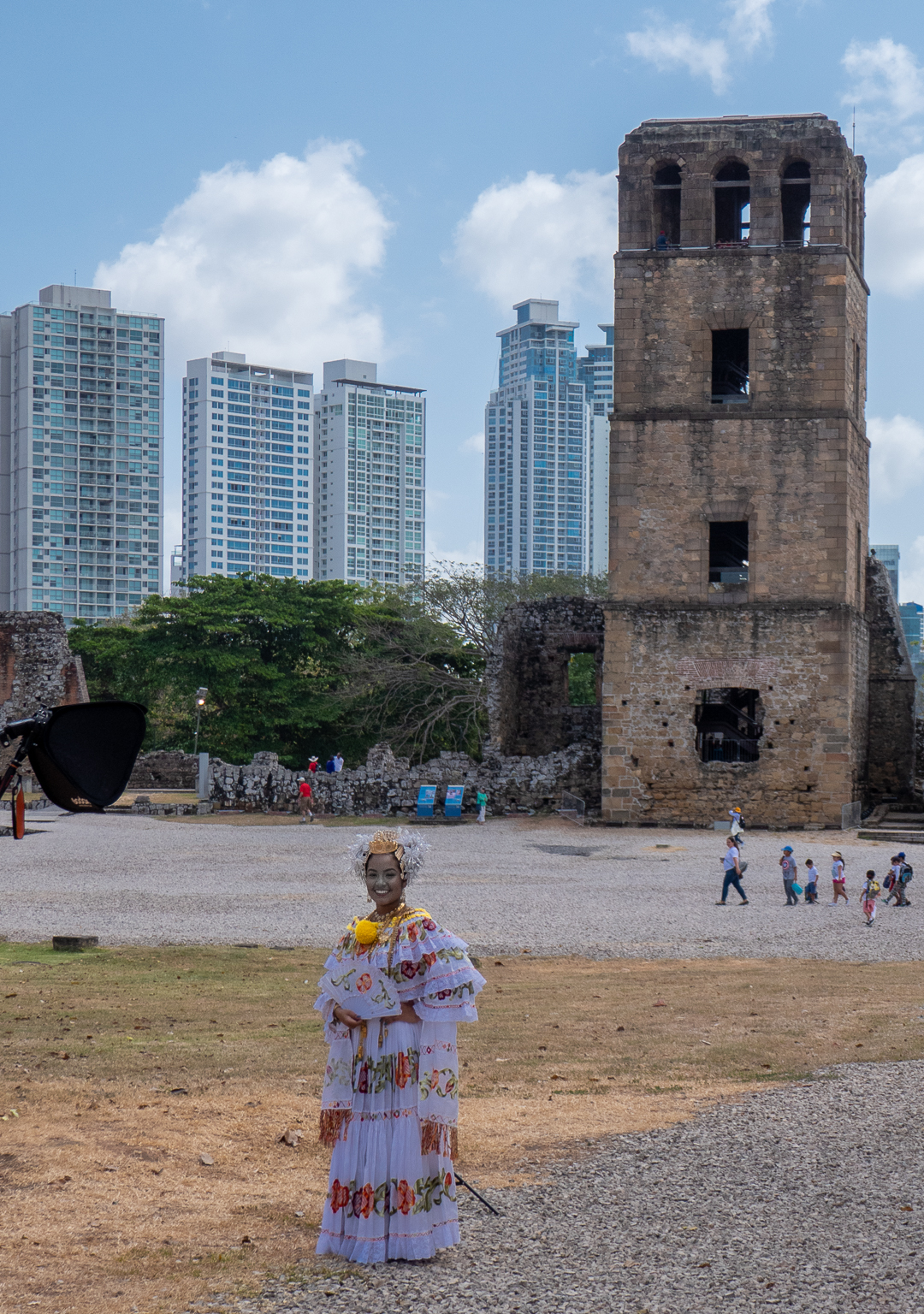
The area was popular with photographers and their subjects, too.
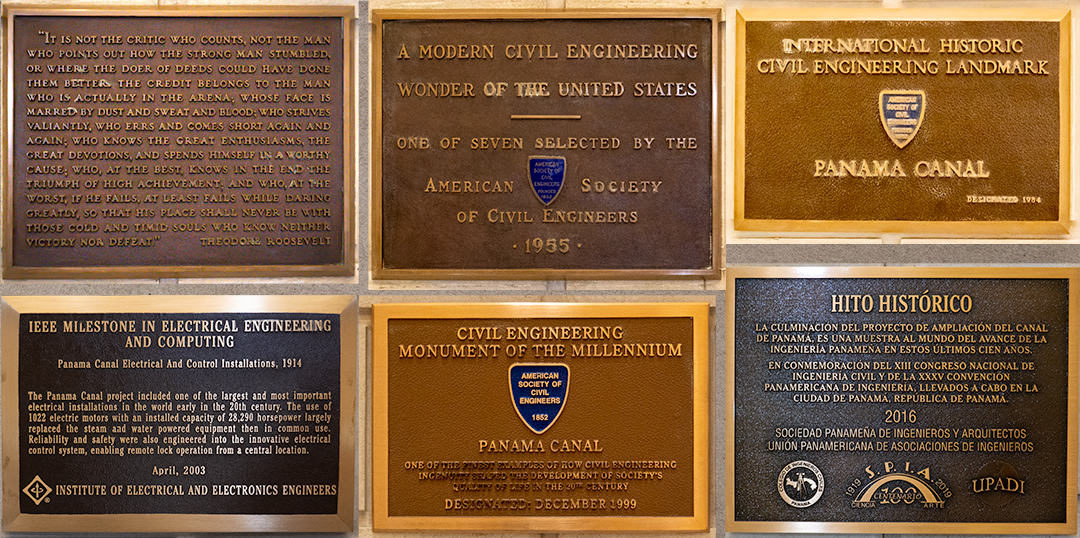
We got back on the bus and traveled to the [Panama Canal Administration Building] in the middle of the former Canal Zone. The outside wasn’t all that impressive, but the inside rotunda was loaded with plaques commemorating the Panama Canal’s engineering achievements.
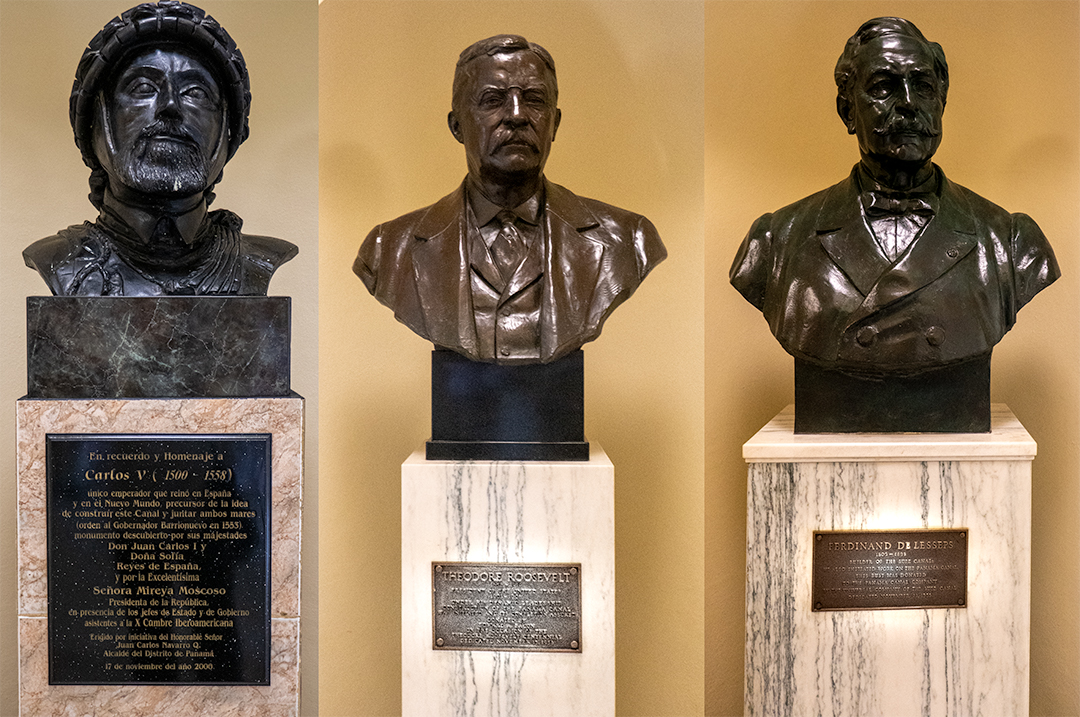
There were also busts of Carlos V of Spain, Teddy Roosevelt, and Ferdinand de Lesseps (builder of the Suez Canal),
There were also murals showing stages of the construction of the Canal, but the Canal Authority’s page has much better photos than I was able to take.

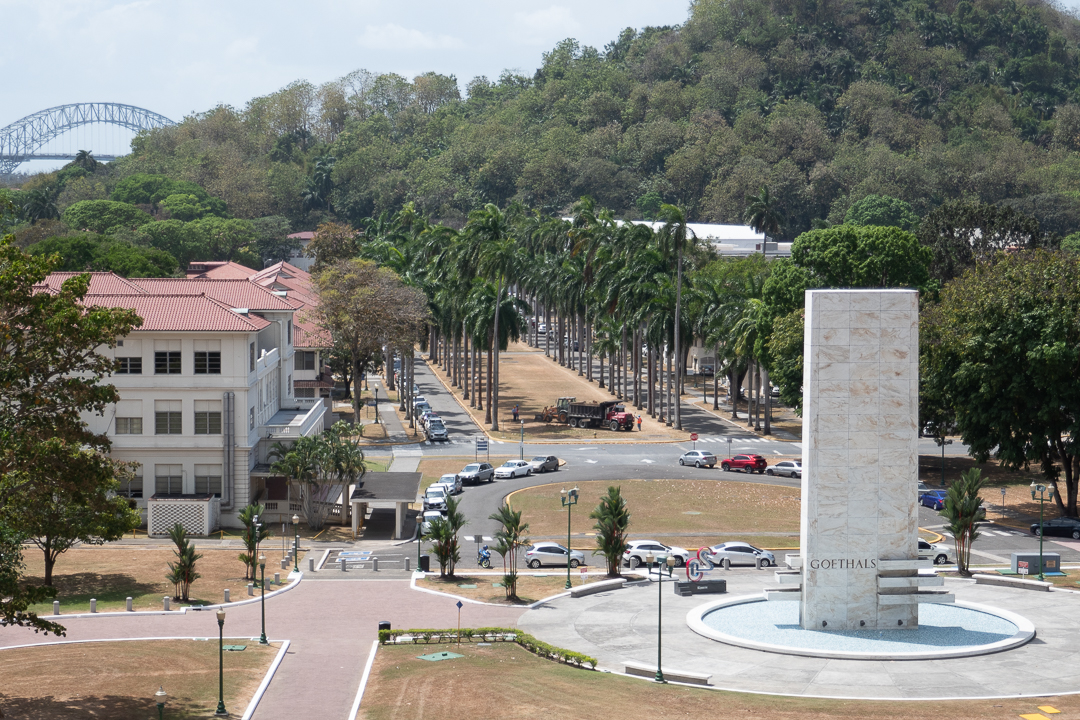
There is an invisible lock just outside the Administration Building – the building is 85 feet above ground level (the height ships rise in the lock), and the palm trees are 110 feet apart and cover a 1000 foot length, matching the size of a lock chamber.
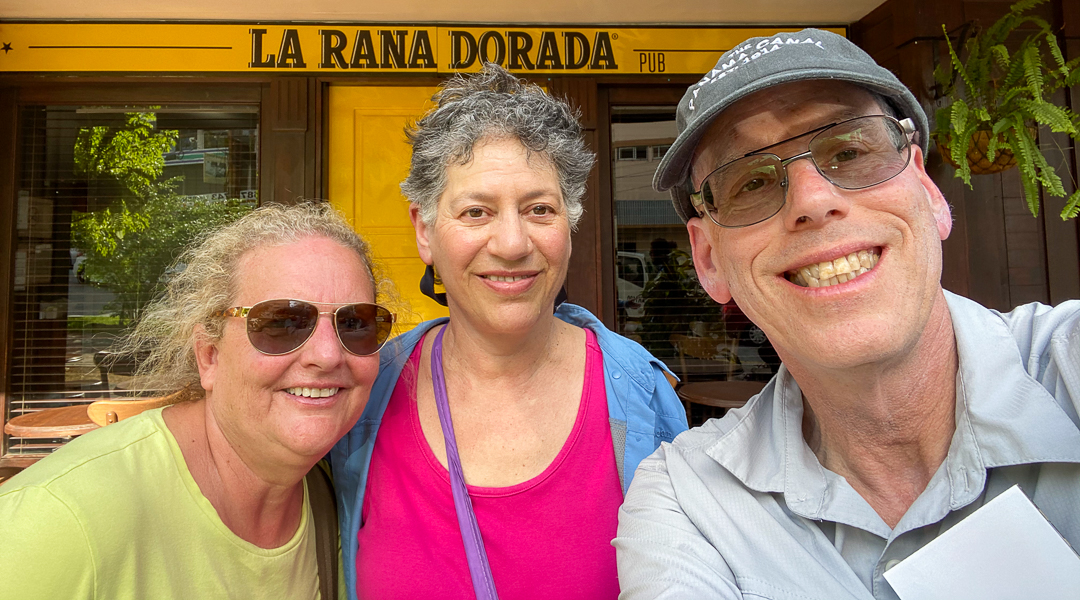
After lunch, we decided to follow the recommendation of the Director of STRI and have a drink at La Rana Dorada brewpub on Via Argentina, about a 20-minute walk from our hotel. Our friend Desi joined us. There were several possible routes; the one we picked might not have been optimal, because we found ourselves in a neighborhood that was under construction…with narrow sidewalks, a couple of feet higher than the street…and not much pedestrian traffic. Suddenly, I heard Desi shout, “David!” – I turned around quickly. We’d gotten far enough ahead of her that a group of four people had inserted themselves between us – she felt hands tugging at her pack, and that’s when she shouted. She saw a 10-year-old (or so) vanishing behind two of the people, and they all ran into a store. She was lucky – nothing had been taken, but we were all nervous (especially her!) until we got into a better area a block later. We all had something harder than beer at the pub.
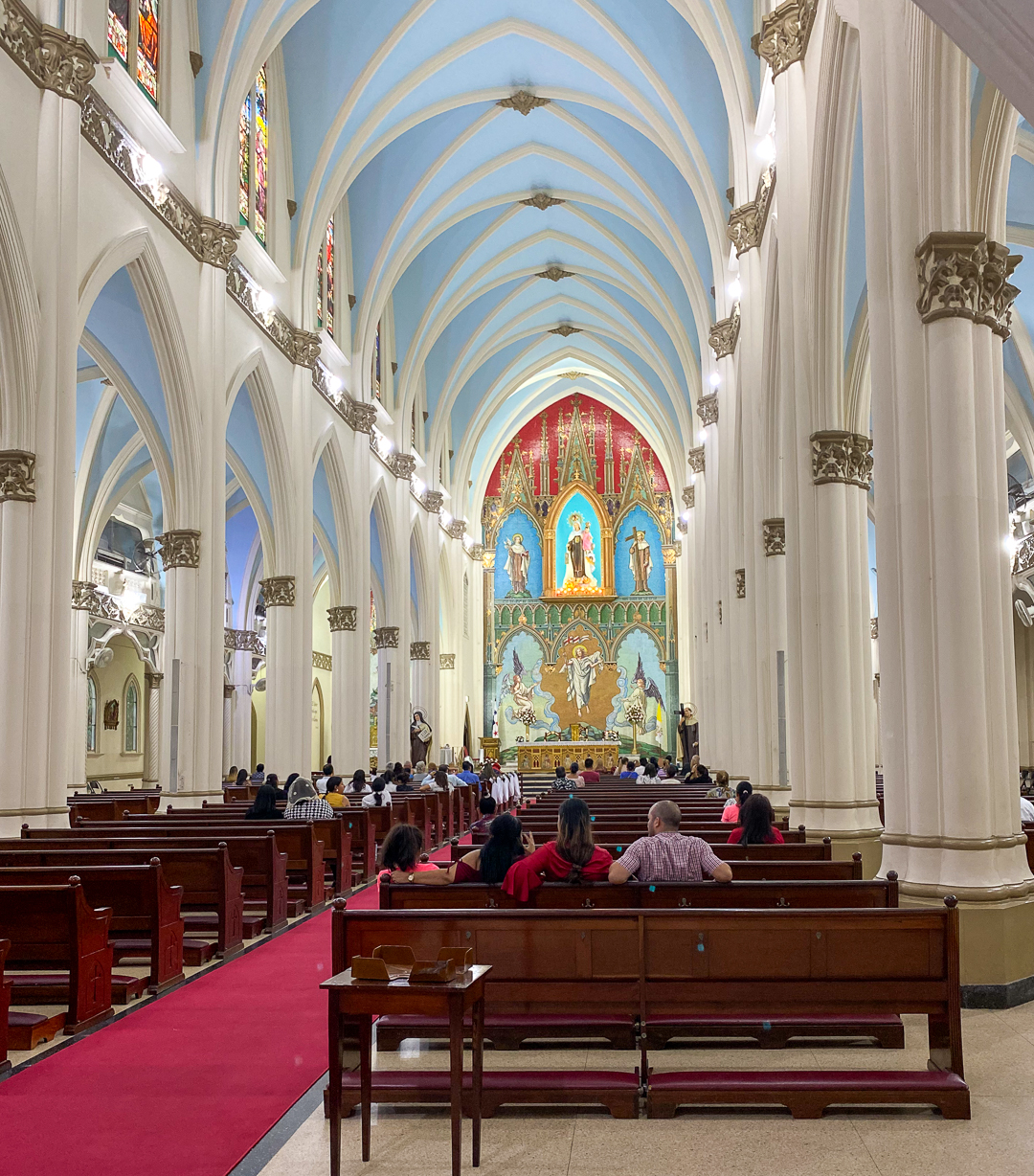
We took a different route back to the hotel – one with wide, well-traveled streets the whole way. We stopped at the [Iglesia de Nuestra Señora del Carmen](Iglesia de Nuestra Señora del Carmen) on our way – it’s a Gothic church in the heart of Panama City. People were gathering for Mass, but we were able to take a quick look inside.
It was Valentine’s Day – Diane and I had dinner al fresco at a true local hotspot, Coffee Max. We split a burger and each had a mango water smoothie – it was delicious! And the company could not have been better!
The Post-Tour Begins

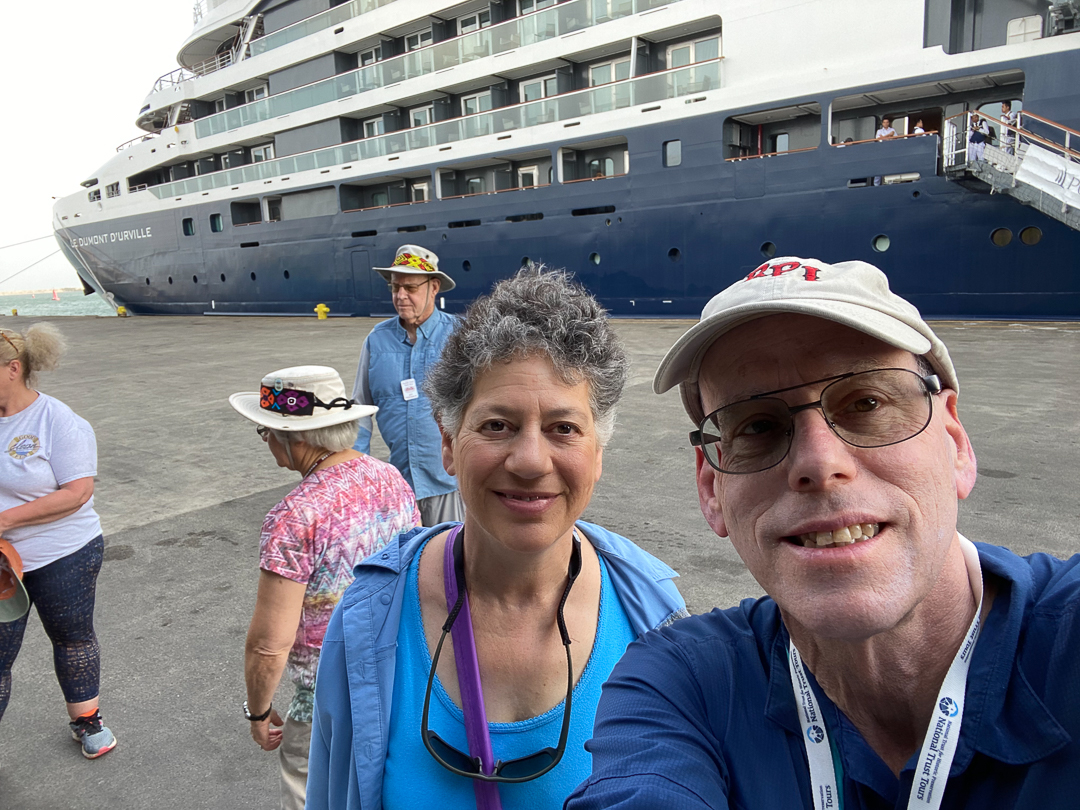
We left the ship just before 8am.

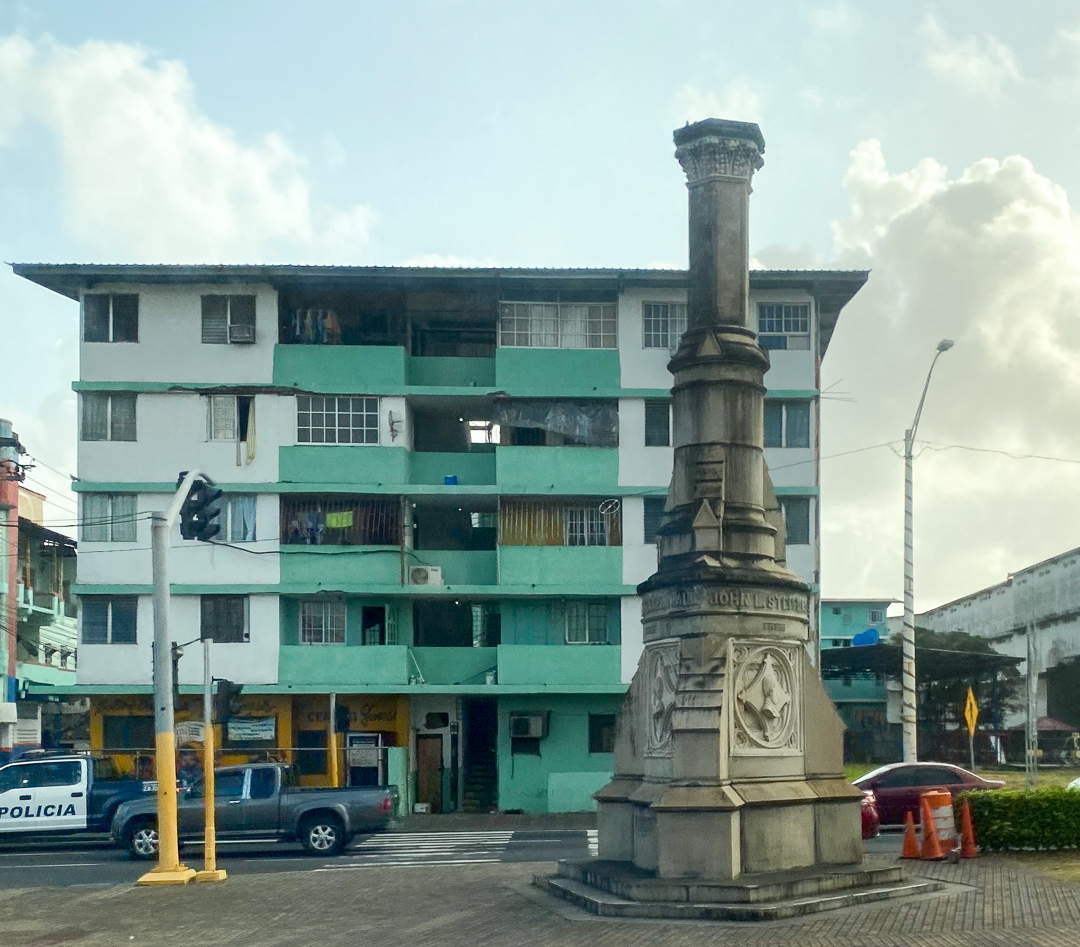
Disembarkation was easy – though they did have dogs sniff all of our luggage! We boarded a bus and took a quick driving tour through Colón en route to the Panama Canal Expansion Visitors Center. There wasn’t much to see in Colón, but our path did take us by the Monument to the Founders of Colón, who were Americans working on the Panama Railway.

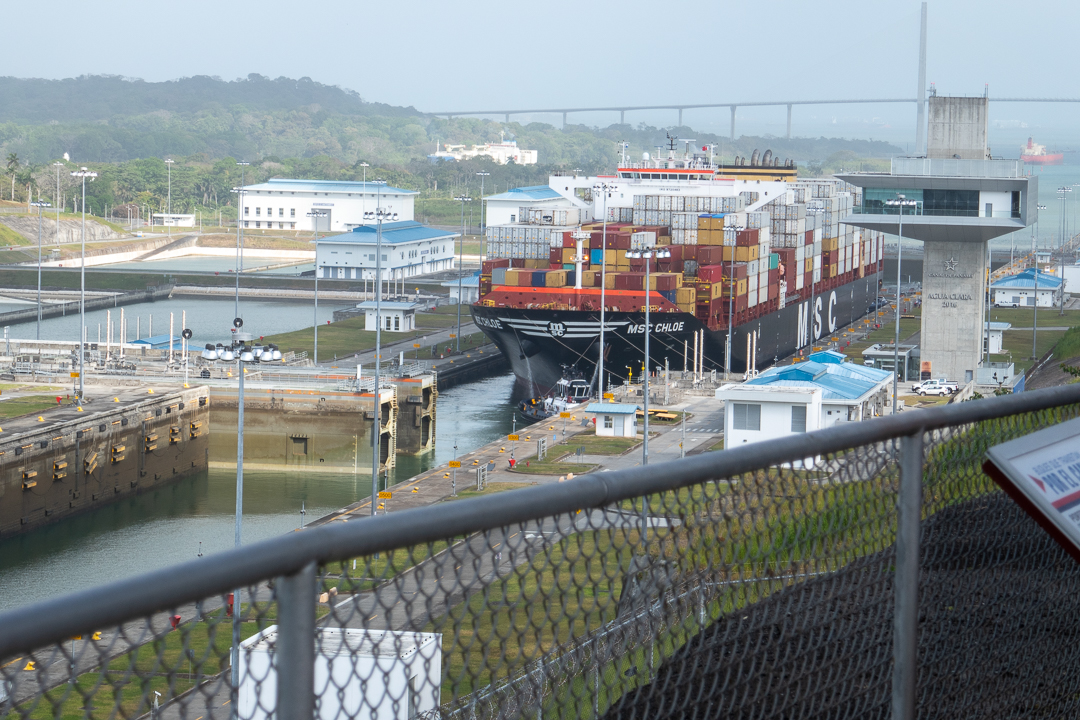
A short time later, we were at the Agua Clara Visitor Center near Gatun Lake, on the Canal Expansion. We watched a movie about the canal, saw a very large ship go through the lock (note the sliding lock gates here, versus the mitre gates on the original canal), and spent some time and a little cash in the gift shop.

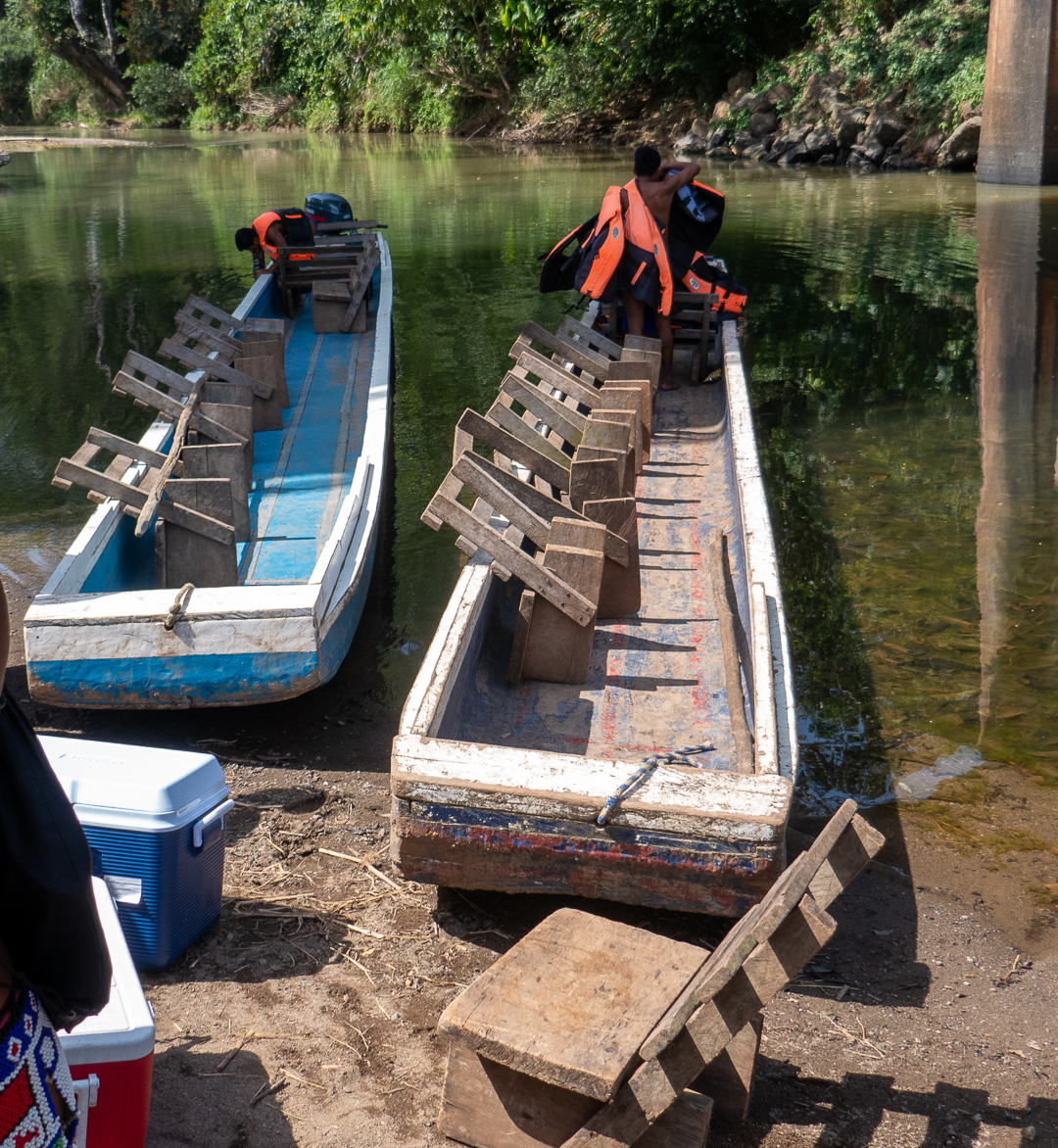
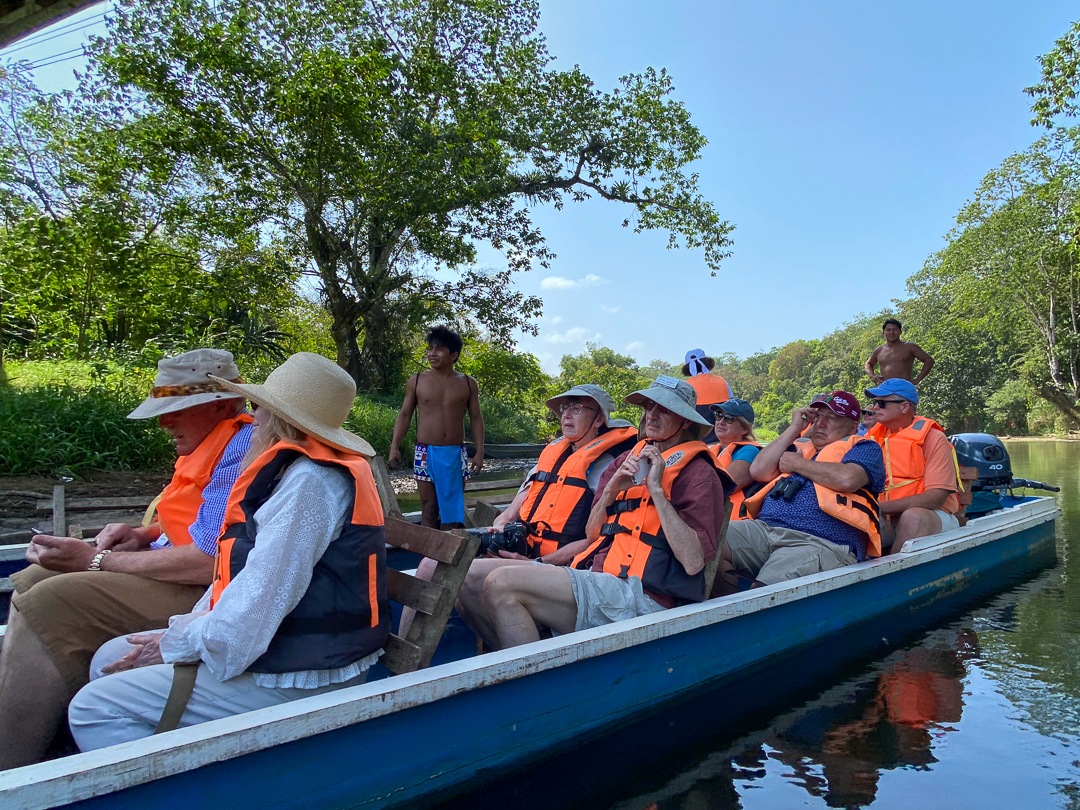
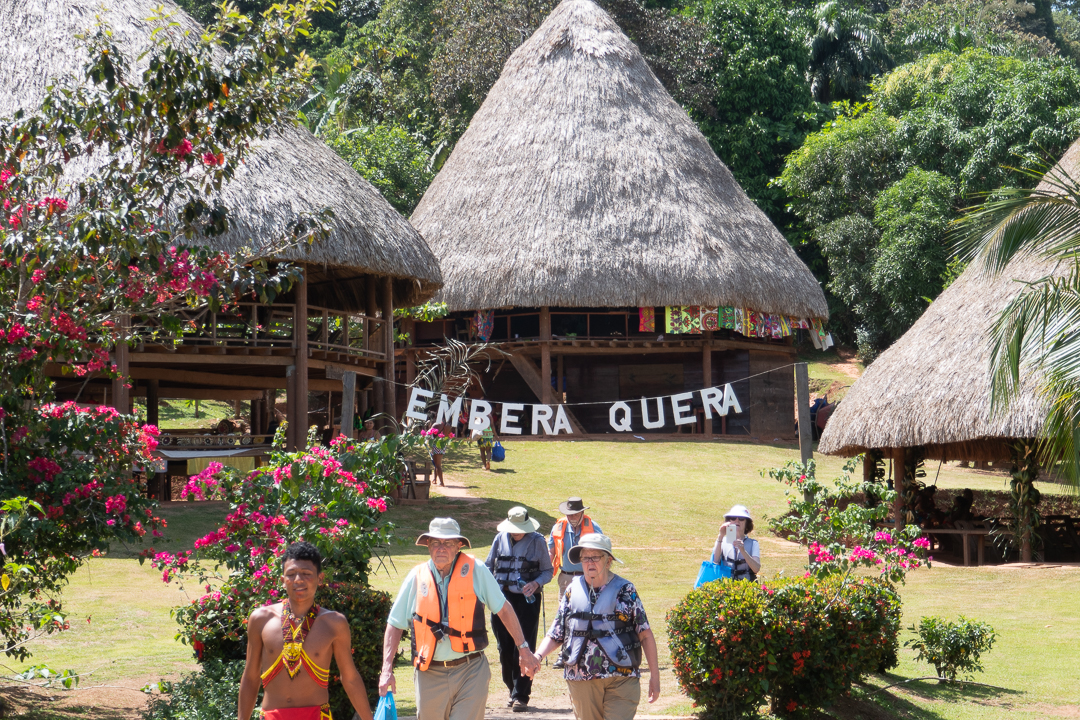
The highlight of the day, though, lay ahead, in the Gatun Basin. The bus parked under an overpass and we walked down a path to the Gatun River, where we met our guides and boarded their dugout canoes for a journey to the village of Embera Drua.

Of course, the canoes had 40-horsepower outboard motors and we were required to wear life vests!

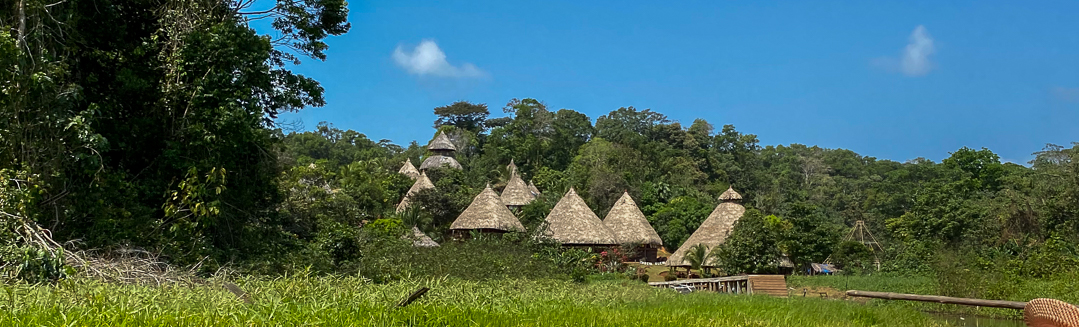
It didn’t take long to arrive at the village.

This village makes its living from tourism, so they greeted us enthusiastically.

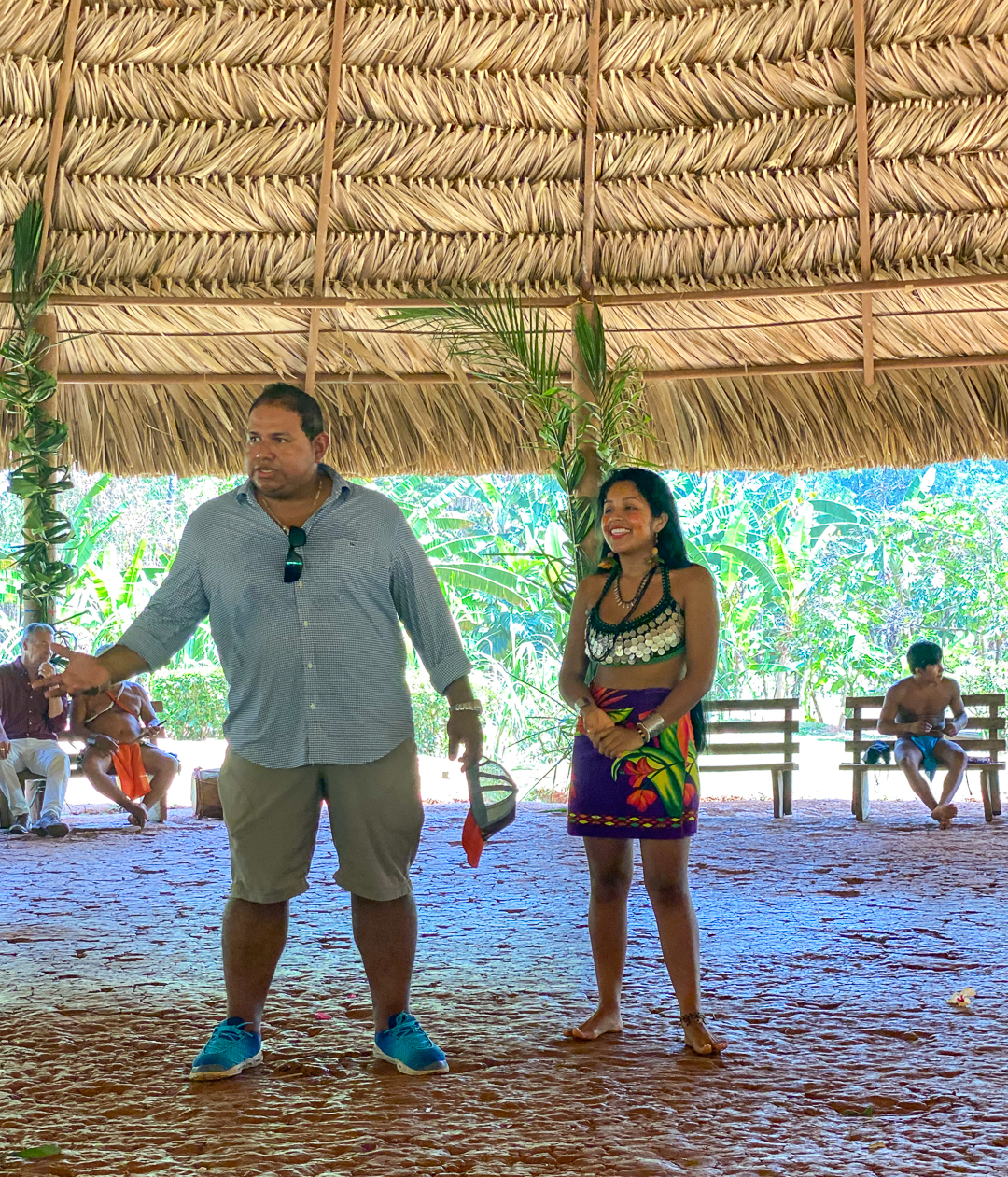
Millie, a 23-year-old who had a BA in Business, was working on her MBA, and would be going to Japan in a few months to present at a conference if the coronavirus permitted, gave a brief talk about the village and its people. There were 20 families, about 80 people; they had moved here from the Darien in Colombia about 13 years ago because FARC controlled their area and it wasn’t safe. They had better economic opportunities here, and better education was available for the children – in the Darien, going beyond elementary school required leaving their community, while they have an elementary school here in the village and the junior high and high schools are only an hour away.

Tourism gives them the chance to make money and preserve their culture instead of moving to the city and being absorbed by it – they want us to share our experience on social media and encourage friends and family to visit (and I’m happy to comply!).

Millie spoke in Spanish and Joshua, our guide, translated to English for us.

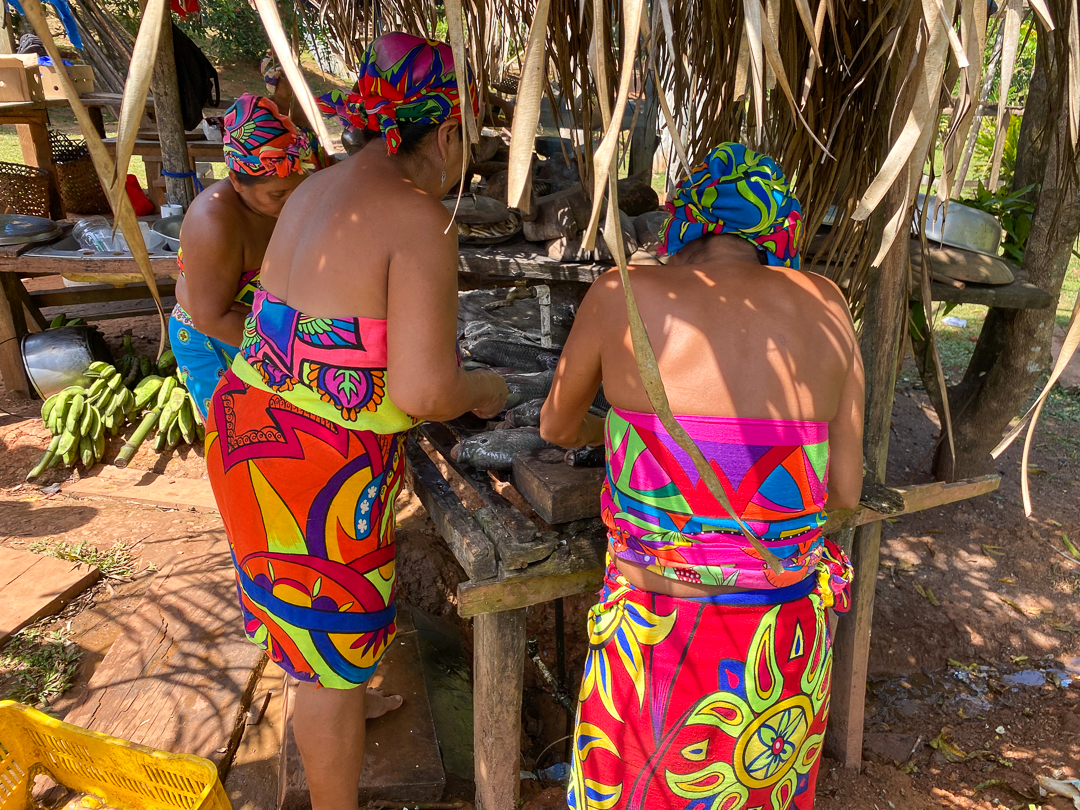
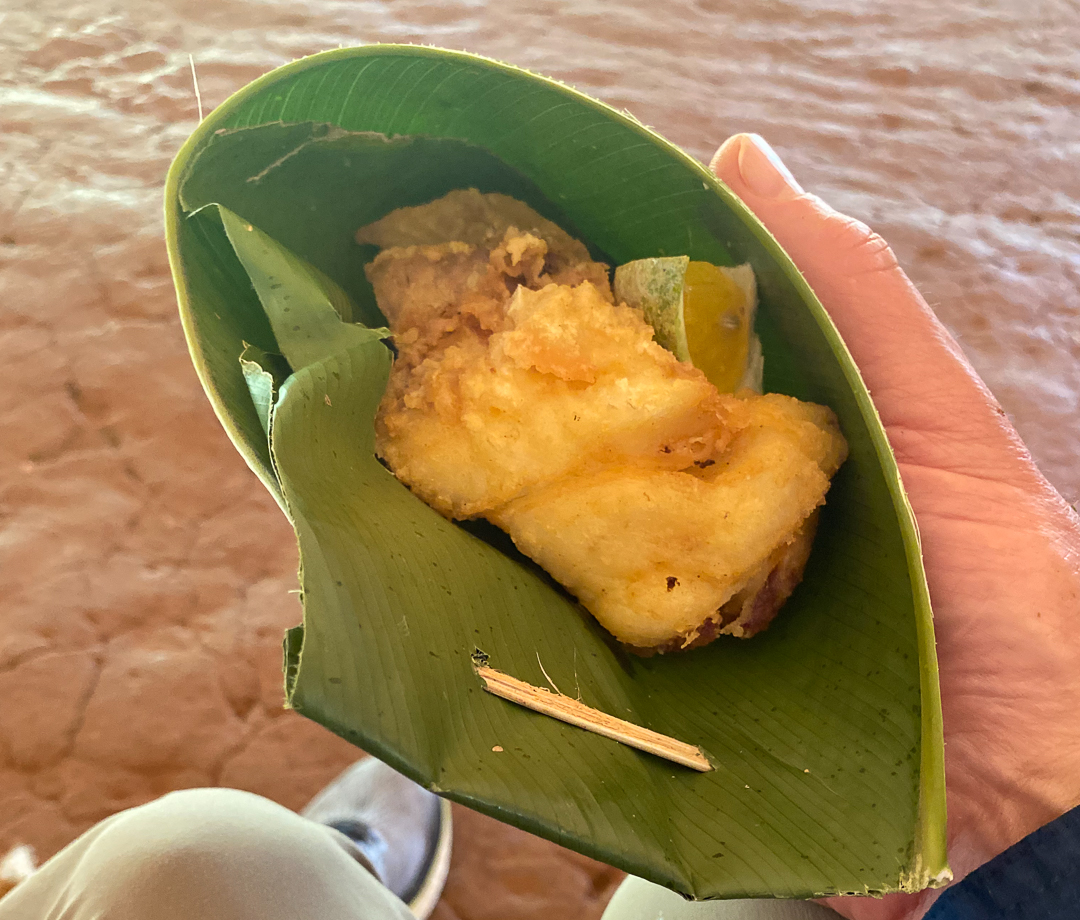
While Millie was talking, some of the women prepared lunch for us (fruit, followed by fried tilapia and plantains served in a banana leaf cone – absolutely delicious!)

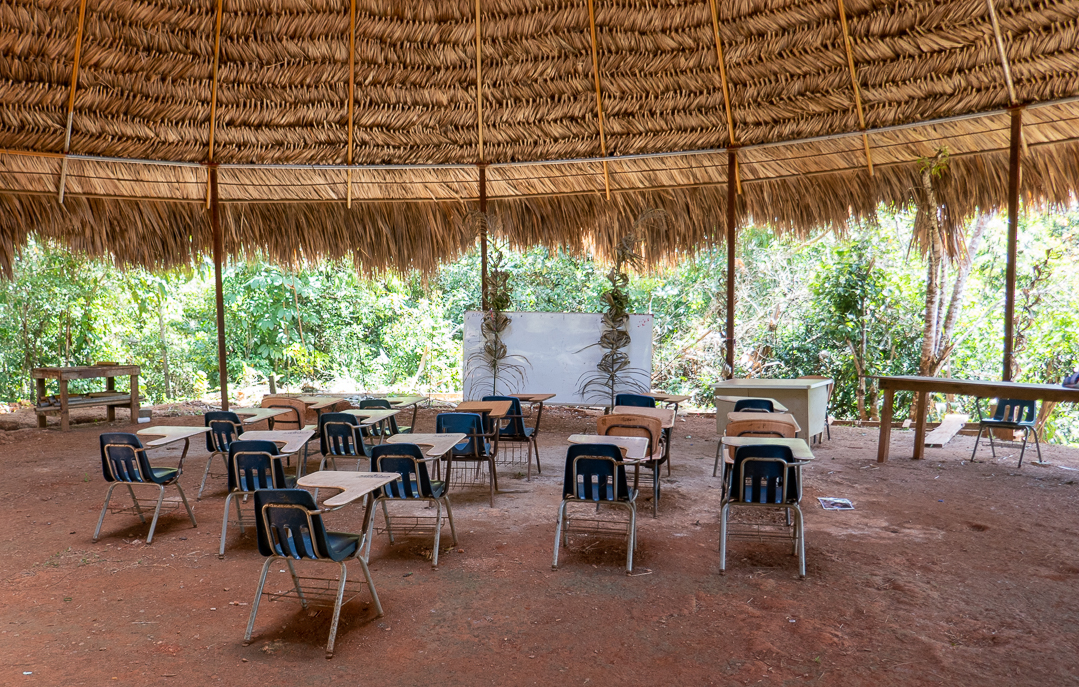
After lunch, we took a tour of the village, including the most distracting classroom I’ve ever seen.

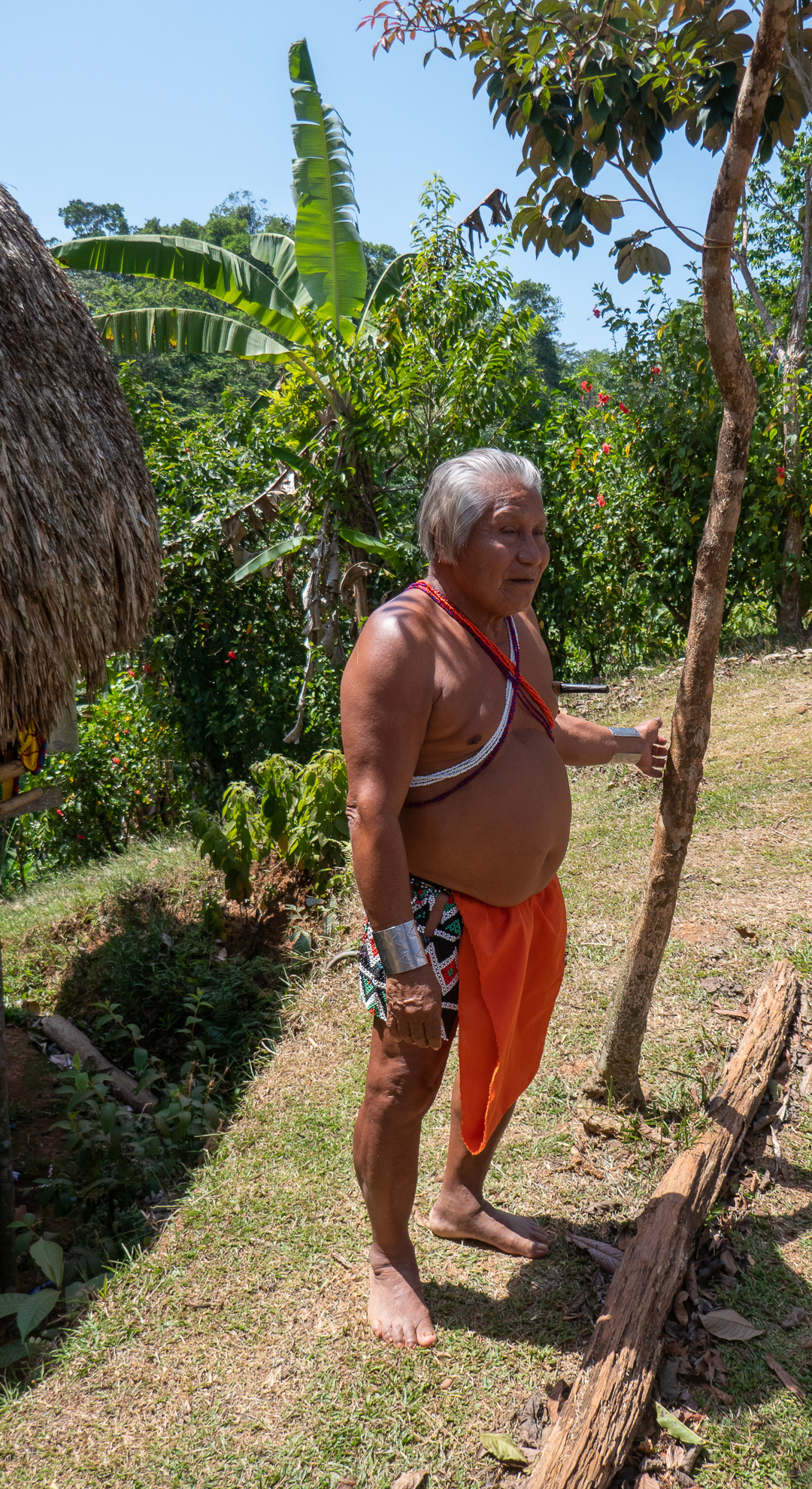
Our guide was one of the village elders.

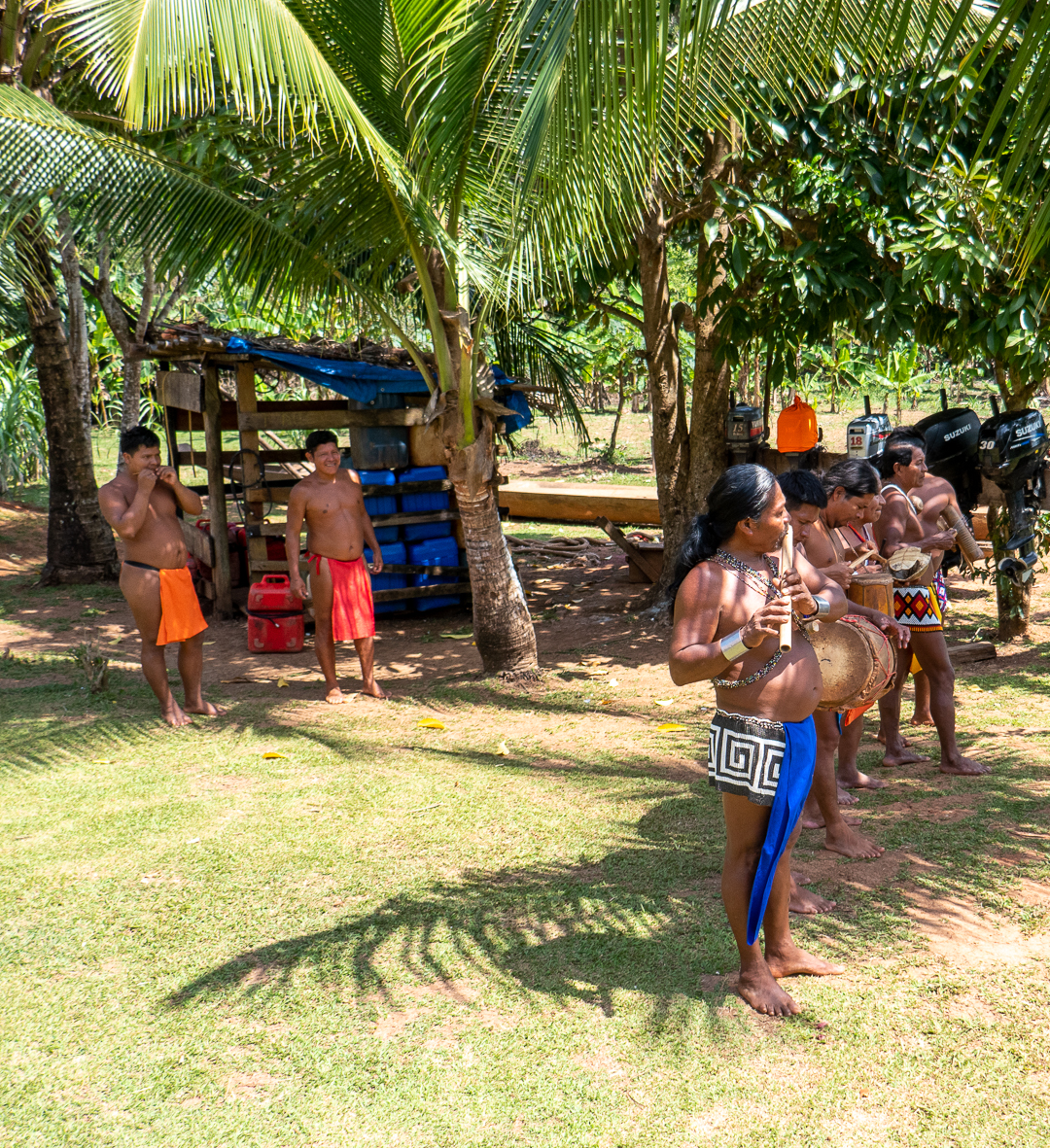
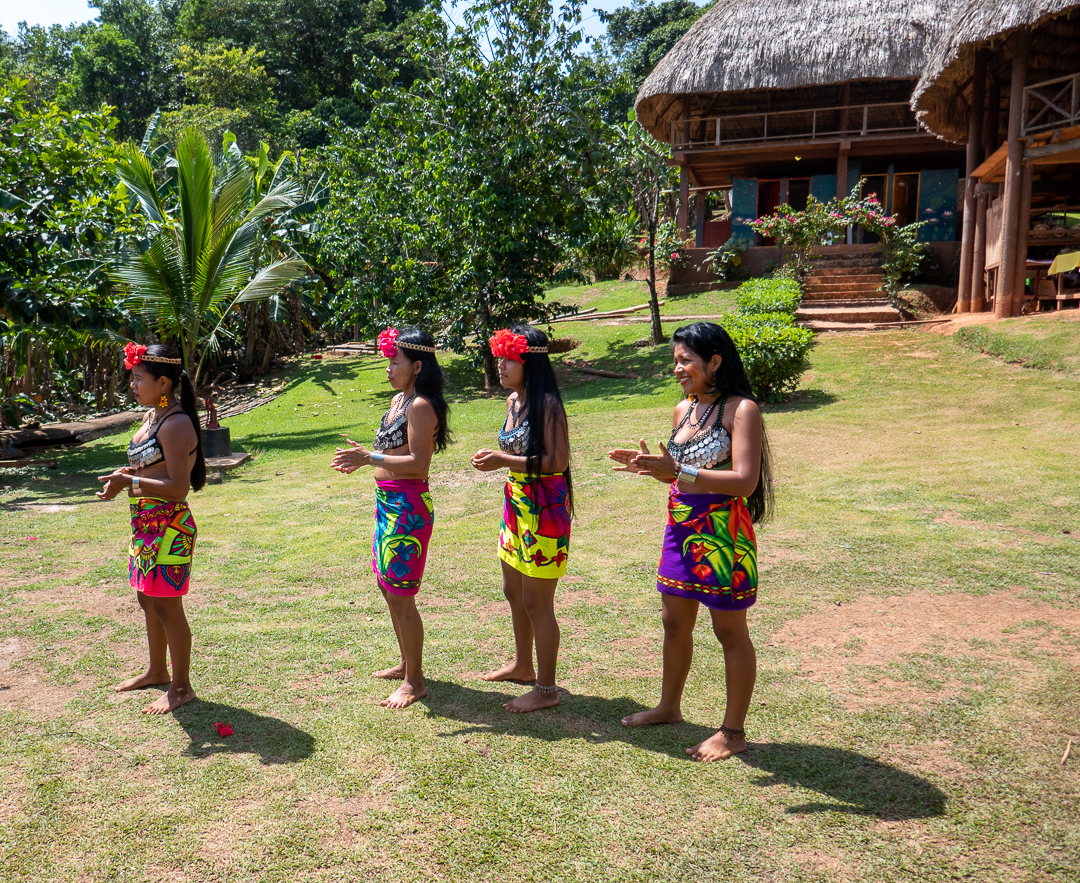
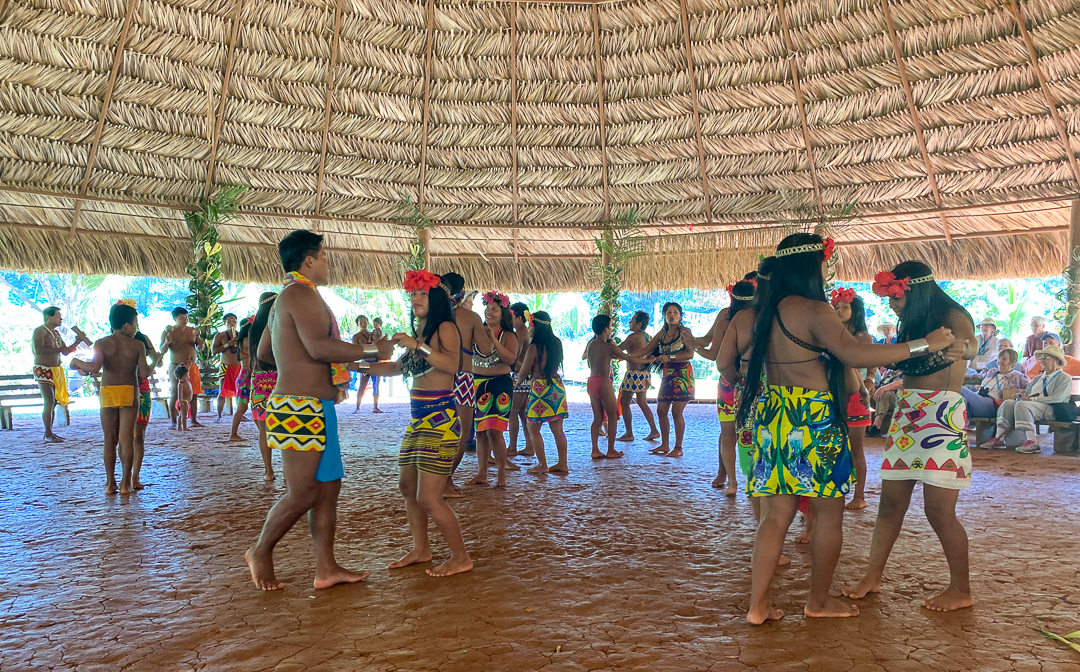
We returned to the center of the village for a show of music and dancing.

There was one more chance to shop (some of the villagers accepted credit cards, and there was good cellular Internet available), then it was farewell.

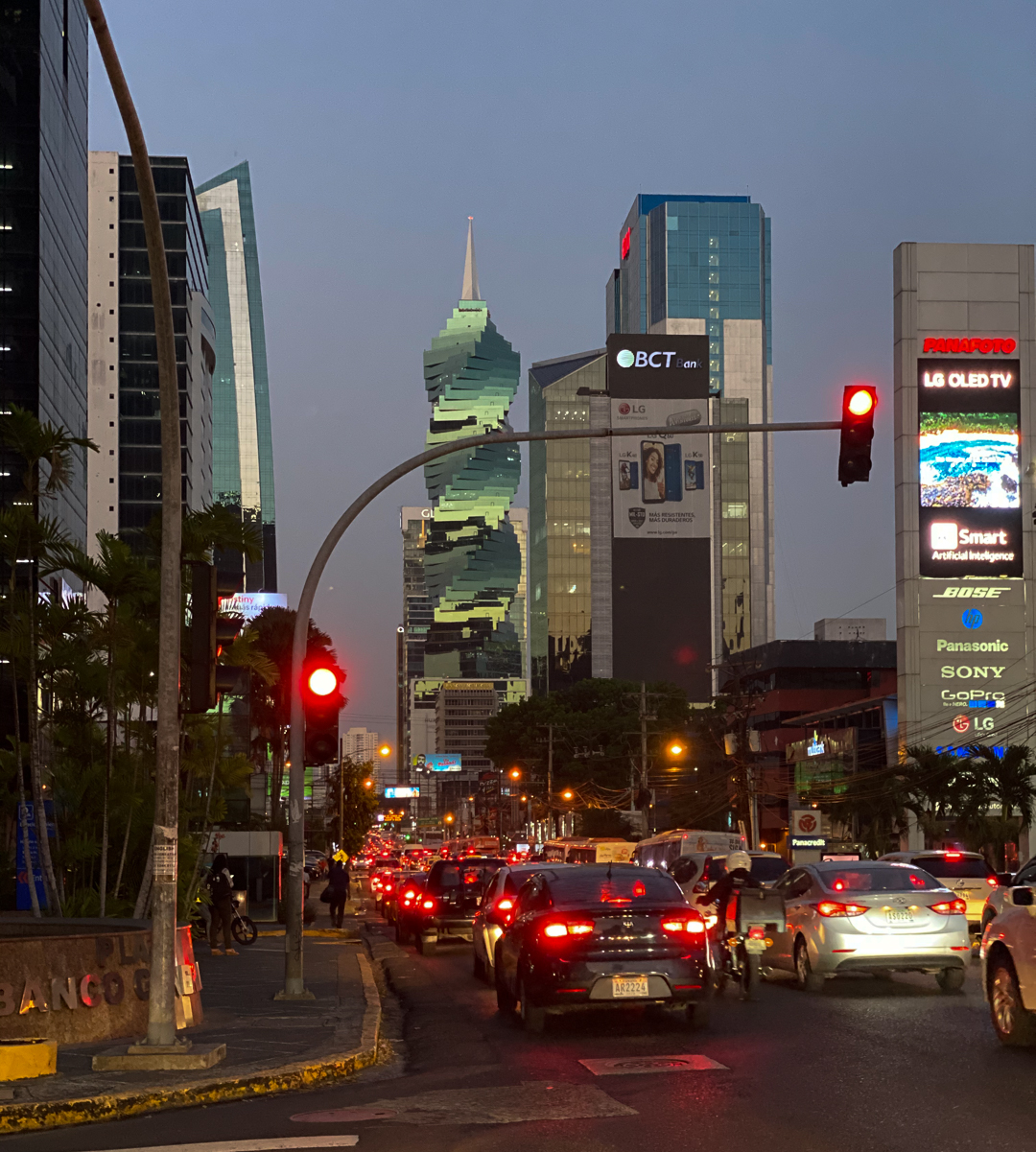
A couple of hours later, we were in a very different environment – Panama City.

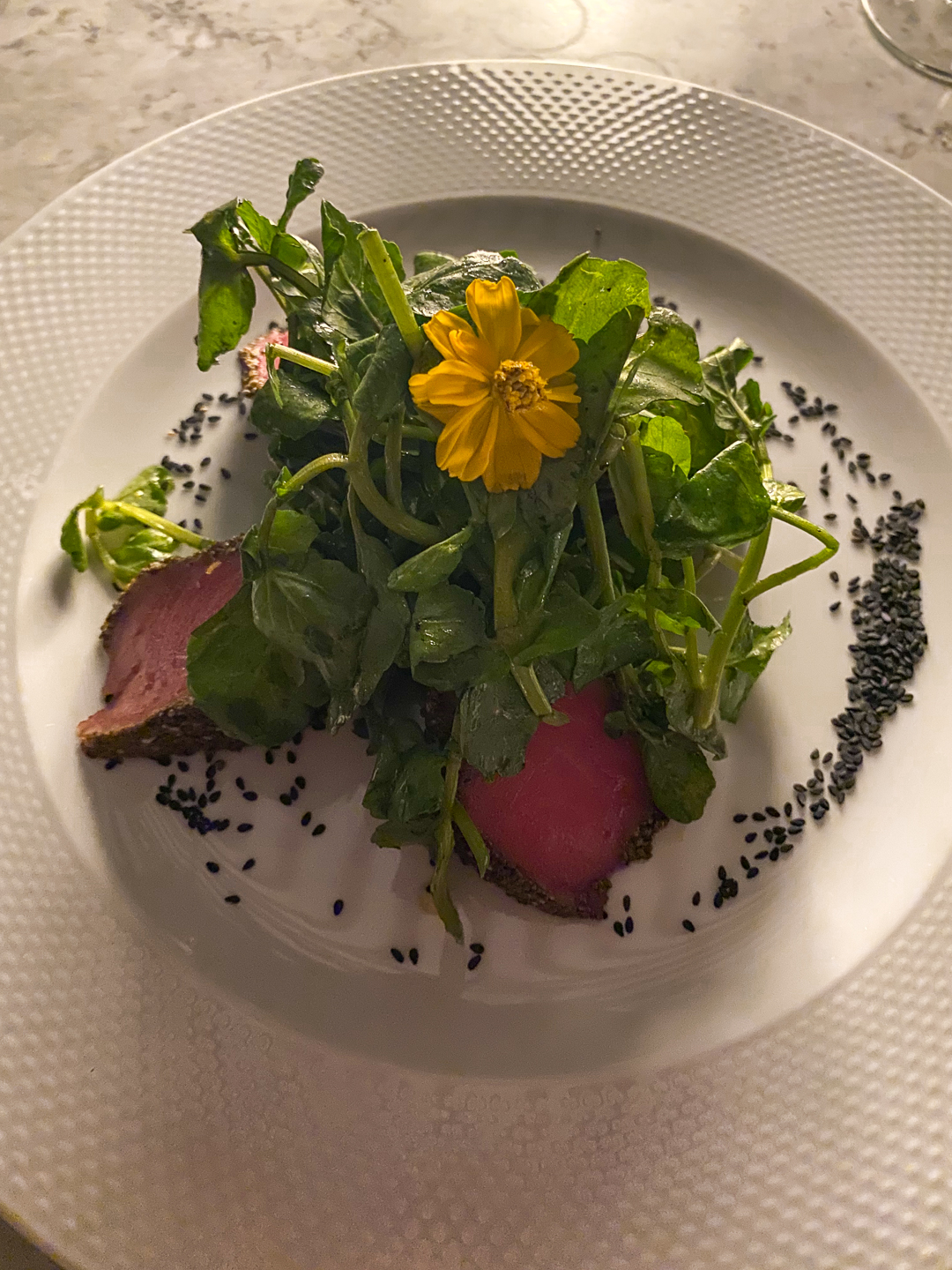
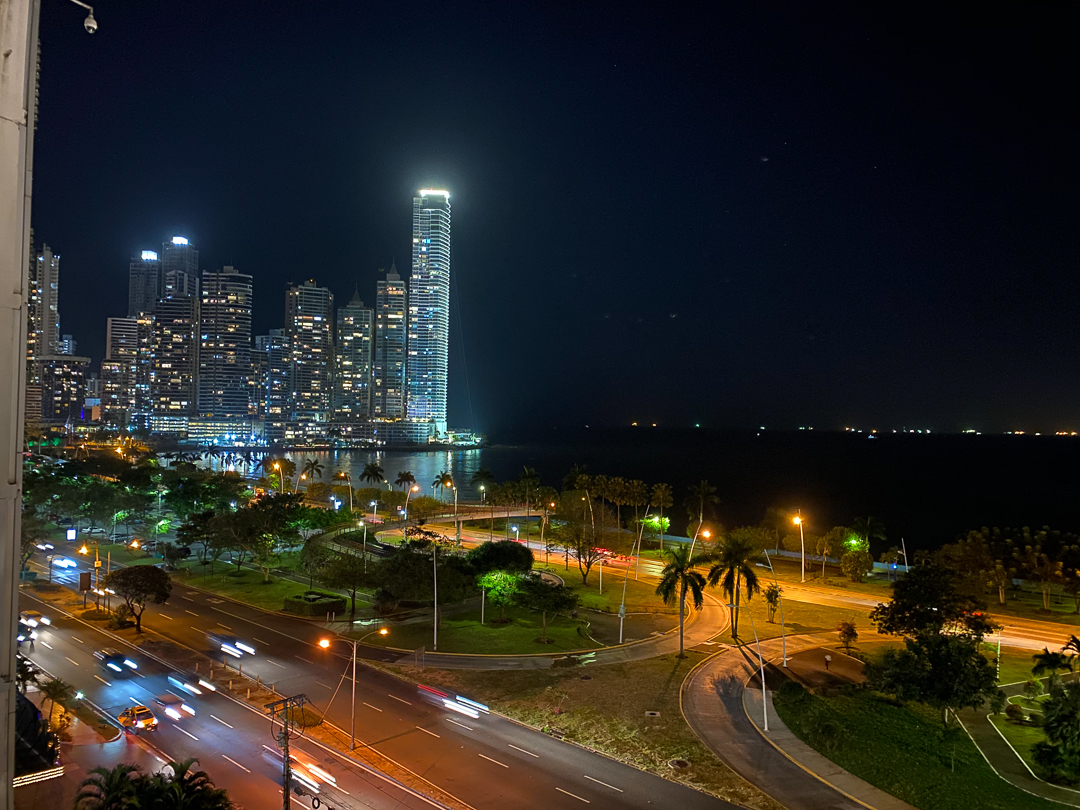
We had to figure out dinner on our own for the first time in a week; we walked a few blocks with friends to the waterfront and had wonderfully delicious seared tuna at Azahar.

We ate outside – the view wasn’t half-bad!